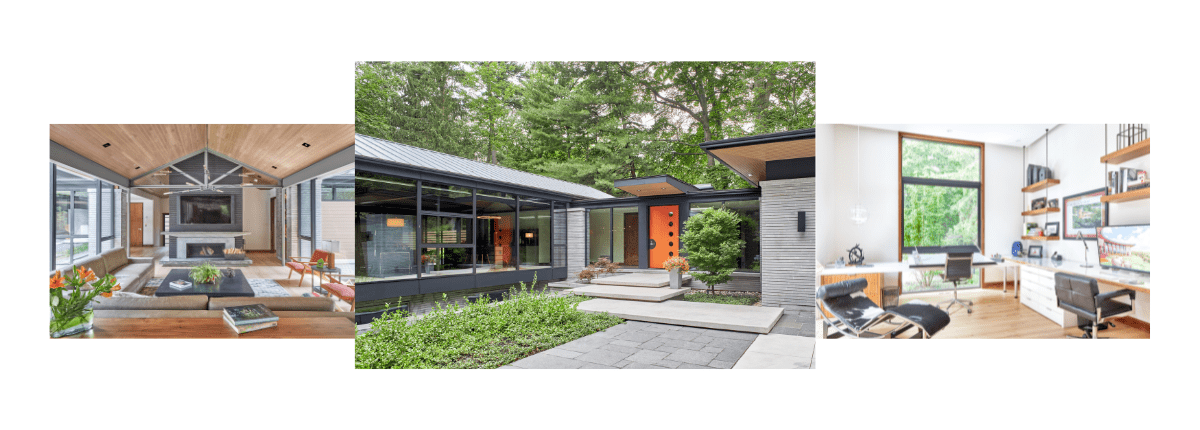

Designing a Rural Property: What to Think About Before You Build
Designing a home on a rural property is a rare opportunity. Unlike most urban or suburban sites, rural land offers space, privacy, and connection to the landscape. But that freedom also comes with complexity. The land itself becomes one of the most important parts of the design process.
A successful rural home isn’t just placed on a property—it’s carefully integrated into it.
Before the architecture begins to take shape, there are several key considerations that help ensure the home, landscape, and infrastructure work together seamlessly.
Start with the Land
The most successful rural homes begin with a deep understanding of the property itself.
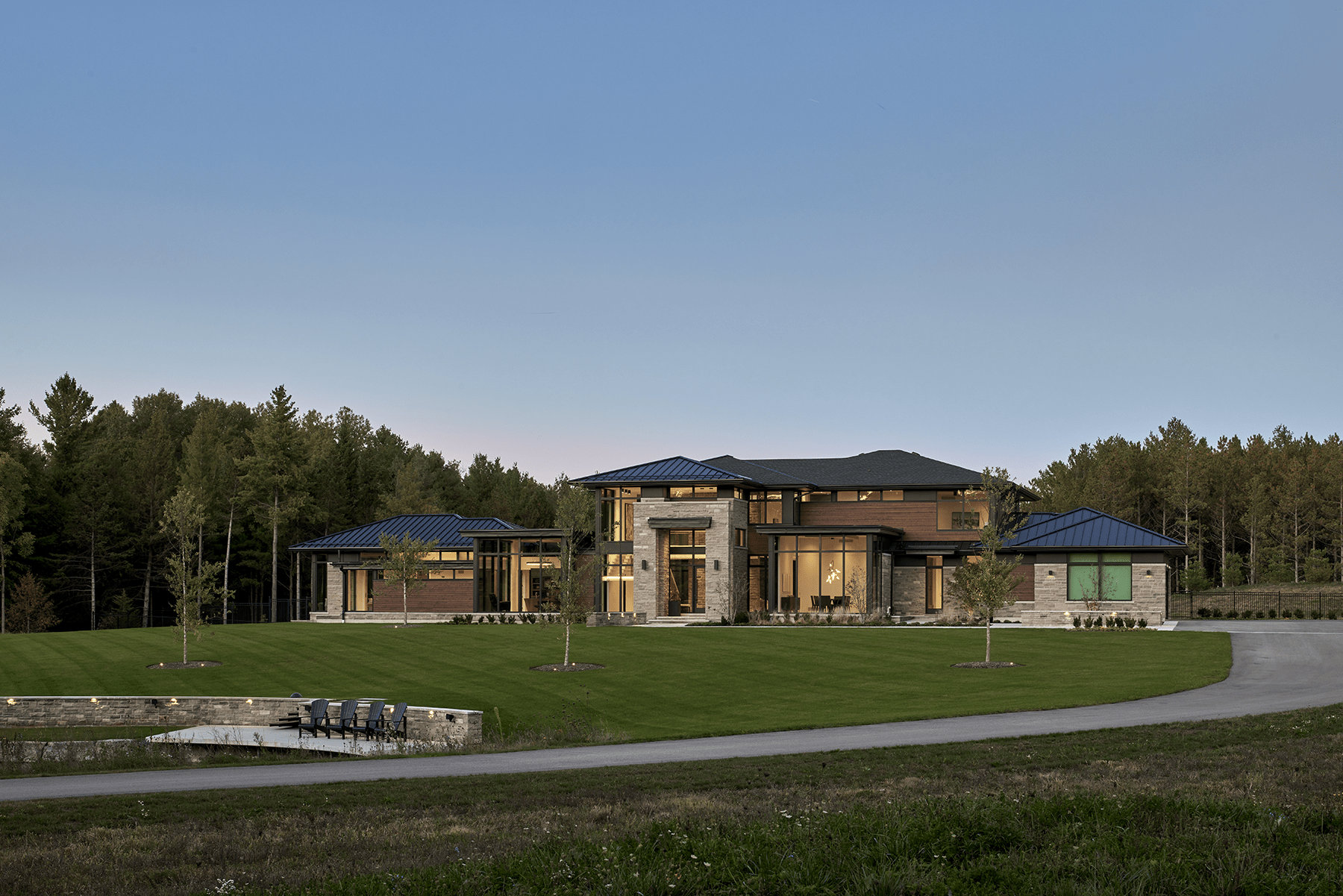
Topography, drainage patterns, sun exposure, and existing vegetation all influence where a home should sit and how it should be approached. Rather than forcing the architecture onto the land, thoughtful planning allows the design to respond naturally to the site.
This early site strategy often shapes everything that follows—from views and outdoor spaces to infrastructure and energy performance.
Septic Location and Servicing
One of the most important but often overlooked considerations on rural properties is the location of the septic system.
Septic beds require significant land area, proper soil conditions, and careful placement relative to the home, wells, and property boundaries. Their location can directly impact where a home can be positioned, as well as how the landscape and outdoor spaces are organized.
Planning the septic location early in the process ensures it integrates discreetly into the property rather than competing with key views or outdoor living areas.
The Journey: Designing the Driveway Experience
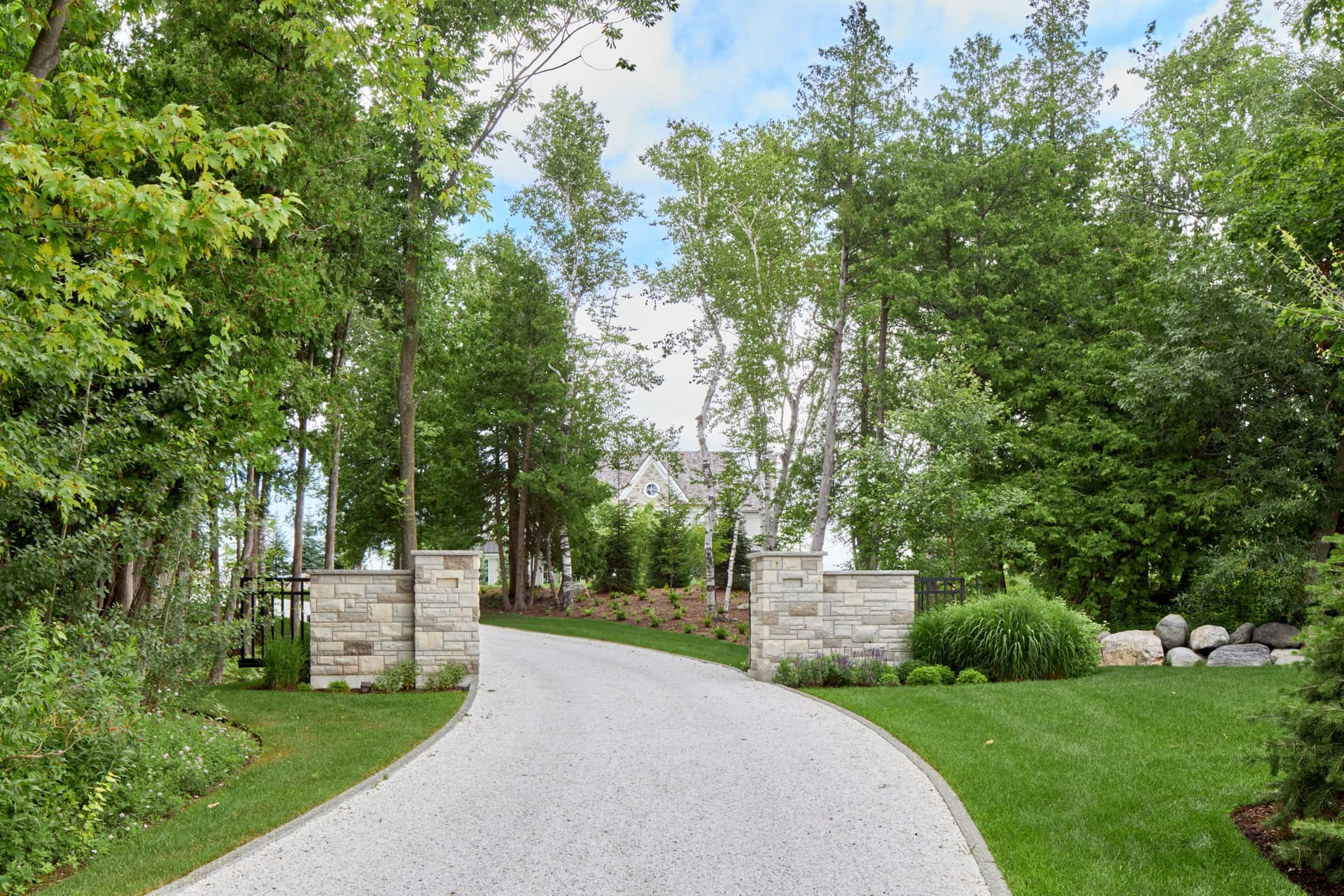
On rural properties, the driveway becomes part of the architectural experience.
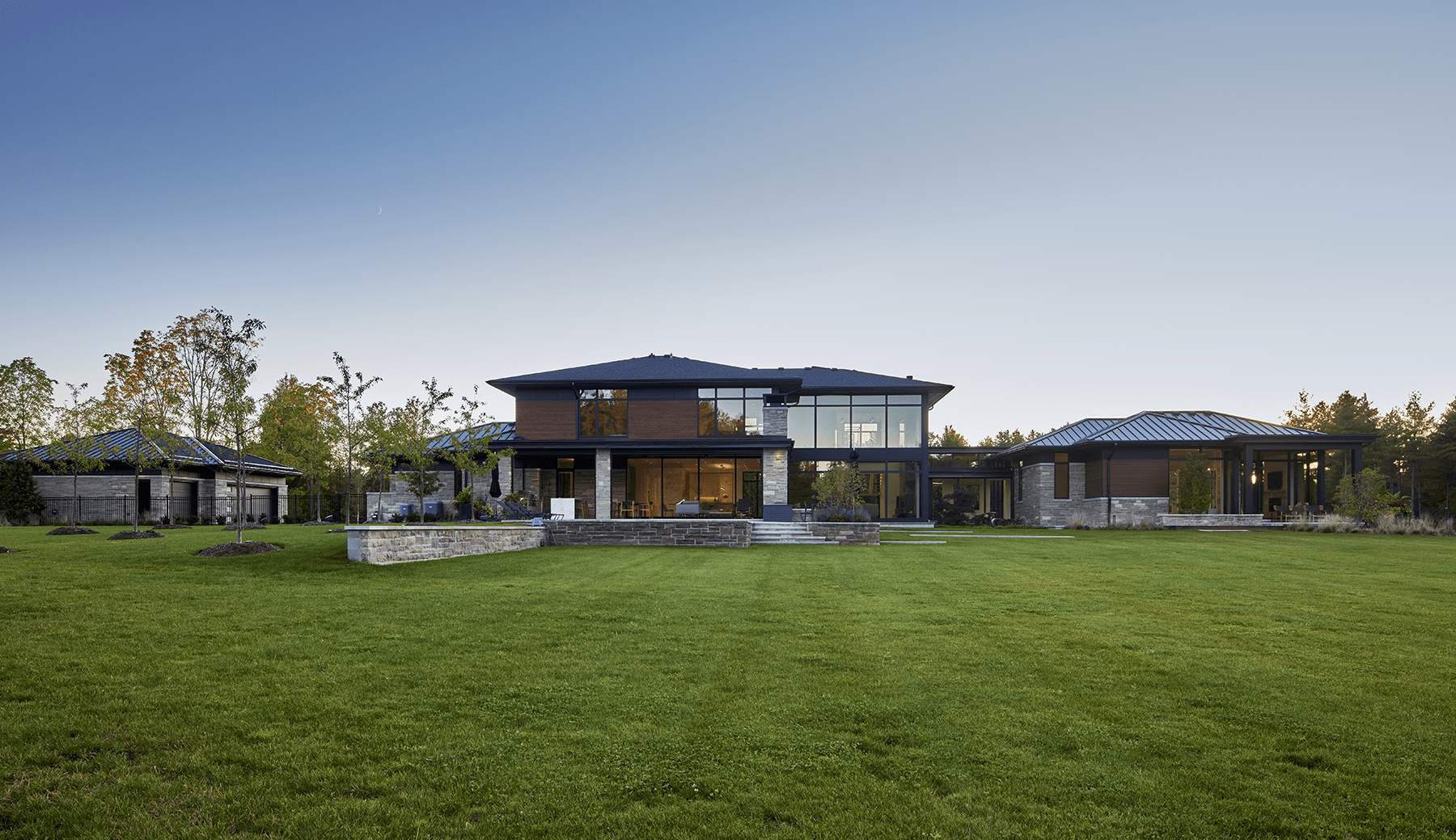
Unlike urban homes where the house is immediately visible from the street, rural sites allow for a sense of arrival. The driveway can wind through the landscape, revealing the home gradually and creating a memorable approach.
Thoughtful driveway design considers:
- The first glimpse of the home
- Framing views through the landscape
- Natural grading and drainage
- Winter access and practicality
Done well, the journey from the road to the front door becomes part of the story of the home.
Working with the Land: Grading and Retaining Walls
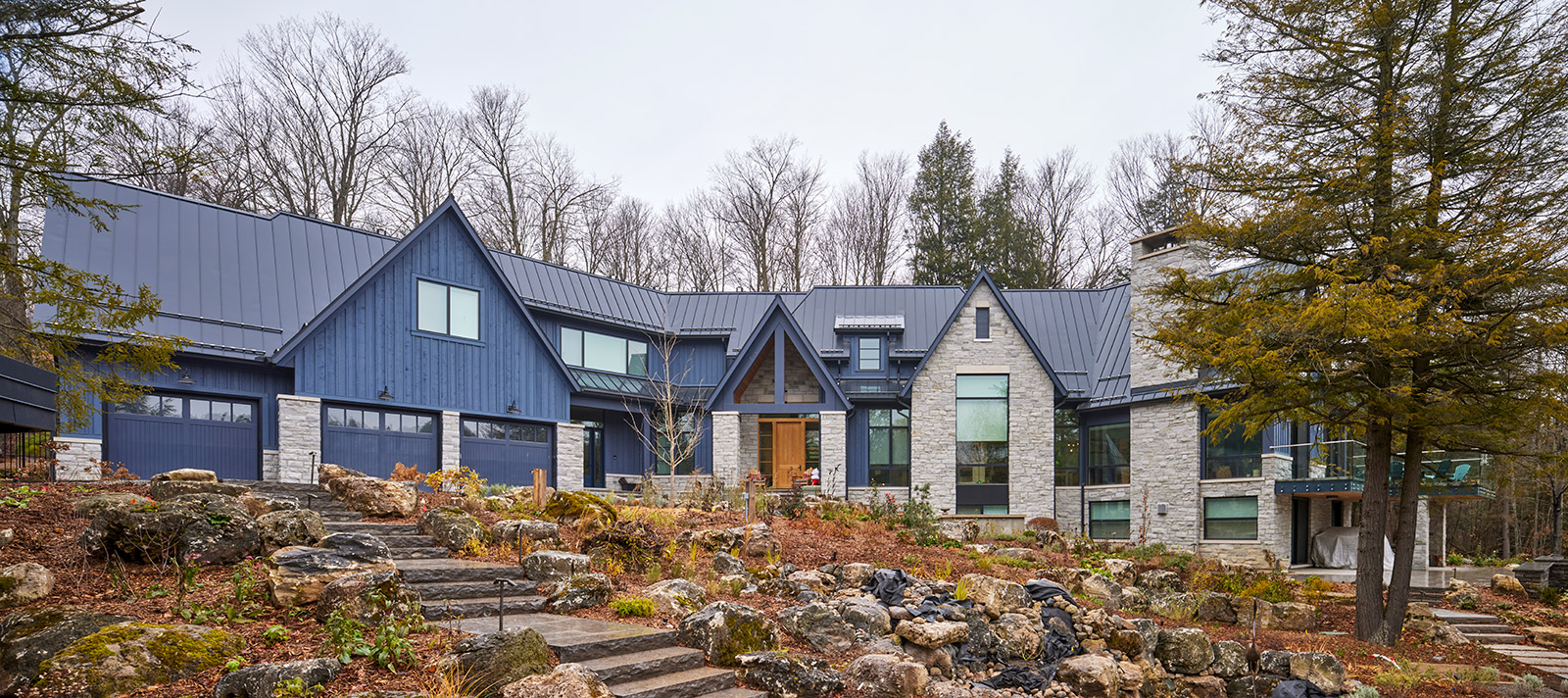
Rural properties often feature significant changes in elevation. Rather than flattening the landscape, thoughtful design works with these contours.
Strategically placed retaining walls and grading solutions can help shape terraces, frame outdoor spaces, and anchor the home to the land. When integrated into the architectural language and landscape design, these elements feel intentional rather than purely functional.
Designing with the Sun
Sun orientation plays a critical role in both comfort and performance.
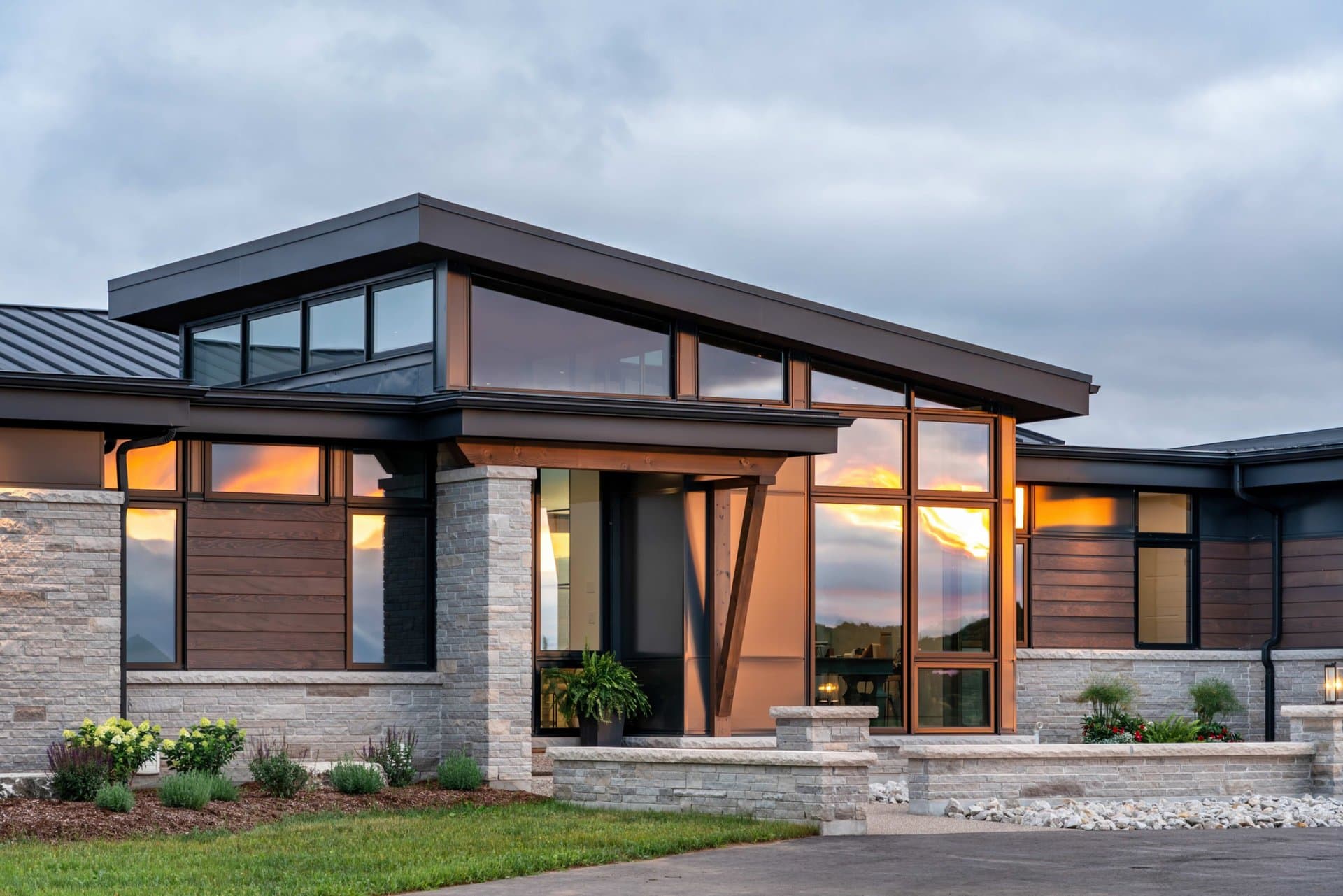
Understanding how the sun moves across the property helps guide decisions about where to place the home and how to orient key spaces. South and west exposures can provide warm natural light and beautiful evening views, while thoughtful overhangs and shading strategies prevent overheating in summer months.
In rural settings—where surrounding buildings rarely block sunlight—this opportunity becomes even more valuable.
Framing the Best Views
Expansive land often comes with expansive views. But capturing them thoughtfully requires careful positioning of the home.
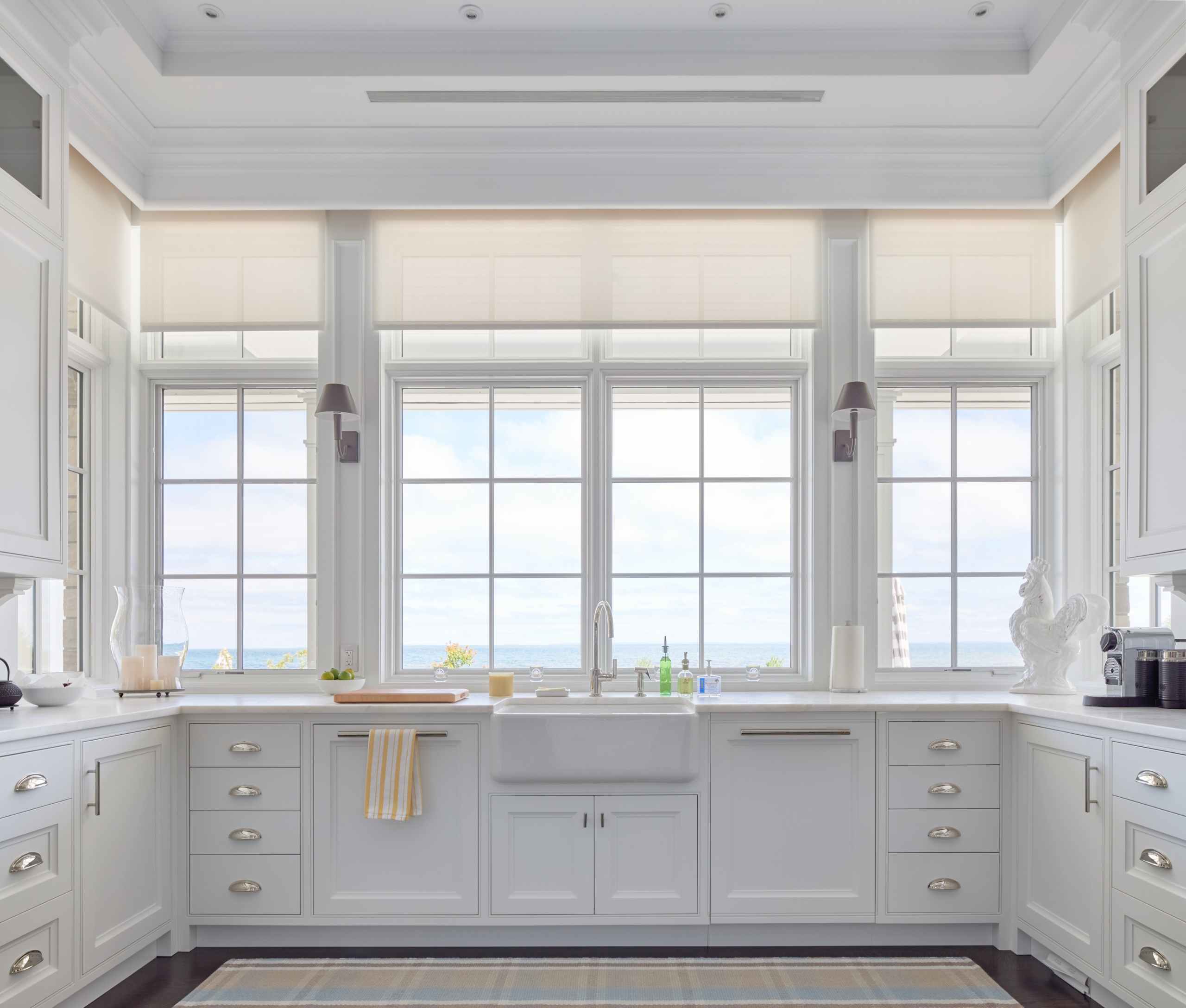
The goal isn’t simply to point the house toward the largest view. Instead, design considers which views matter most—a distant tree line, a rolling meadow, a quiet pond, or a sunset horizon.
Windows, terraces, and outdoor rooms can then be aligned to frame these moments, allowing the architecture to celebrate the landscape.
Creating Intimate Outdoor Spaces on Expansive Land
While rural properties offer openness, they can sometimes lack a sense of enclosure. Without thoughtful design, outdoor spaces can feel exposed rather than comfortable.
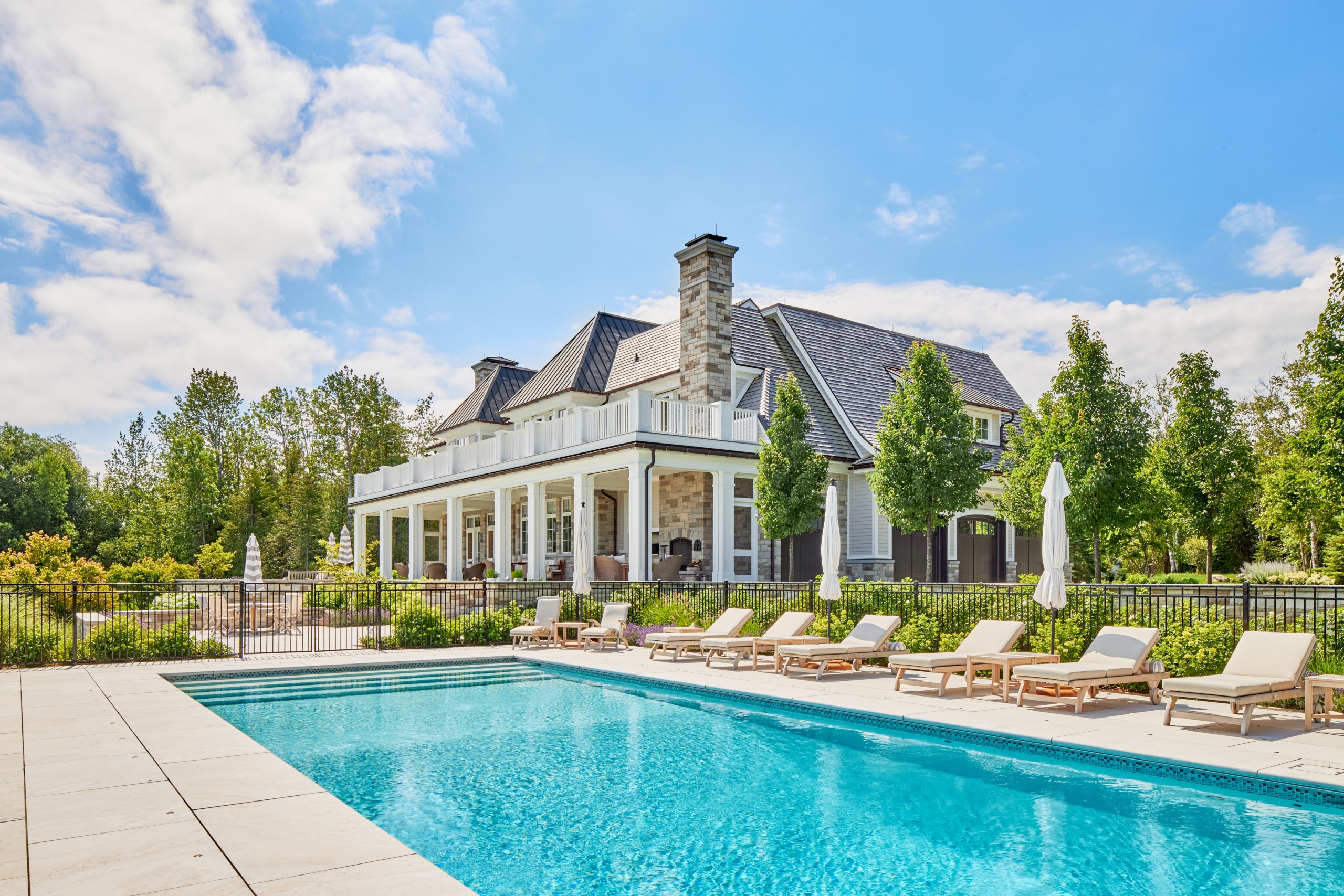
Designing these spaces successfully requires understanding not only views and sun orientation, but also how wind moves across the land. By studying the landscape and prevailing wind patterns, outdoor areas can be positioned and shaped to provide shelter and comfort throughout the seasons.
Creating intimate outdoor environments often involves shaping the landscape with subtle interventions such as:
- Berming and gentle grading
- Strategic tree placement
- Garden walls or hedging
- Terraced patios
Together, these elements help establish protected outdoor rooms that feel welcoming and usable while still maintaining a strong connection to the surrounding land. More importantly, they help create a sense of place—outdoor environments that feel intentional, comfortable, and deeply rooted in the landscape.
Planning for Sustainable Energy Systems
Rural properties often provide the space and flexibility to incorporate alternative energy systems.
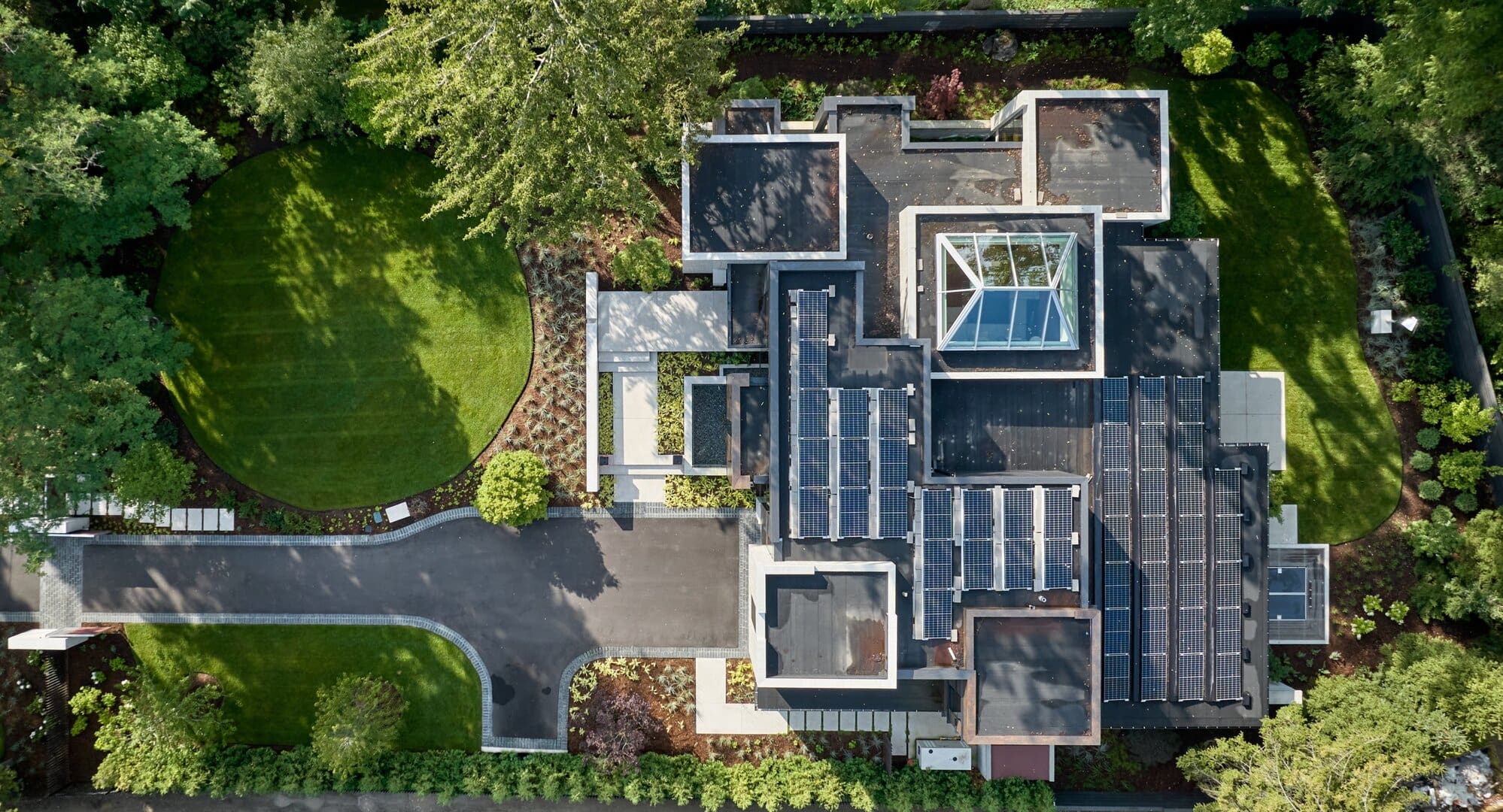
Geothermal heating systems can take advantage of available land area, while solar arrays may be positioned to maximize sun exposure without impacting the architecture or primary views.
Planning these systems early ensures they integrate naturally into the property rather than feeling like afterthoughts.
Accessory Structures and the Broader Property Plan
Many rural properties include existing outbuildings or opportunities to add new ones—garages, workshops, guest houses, barns, or recreational structures.
Rather than designing these elements independently, a thoughtful master plan considers how all structures work together across the site.
Their placement can help define courtyards, screen service areas, and create a cohesive sense of organization across the property.

A Property That Works as a Whole
Designing a rural home is ultimately about more than the house itself.
It’s about understanding the land, respecting its natural character, and creating a property where architecture, landscape, and infrastructure feel seamlessly connected.
When approached thoughtfully, a rural property becomes more than a place to live—it becomes an environment that evolves with the seasons, supports daily life, and feels deeply rooted in its surroundings.
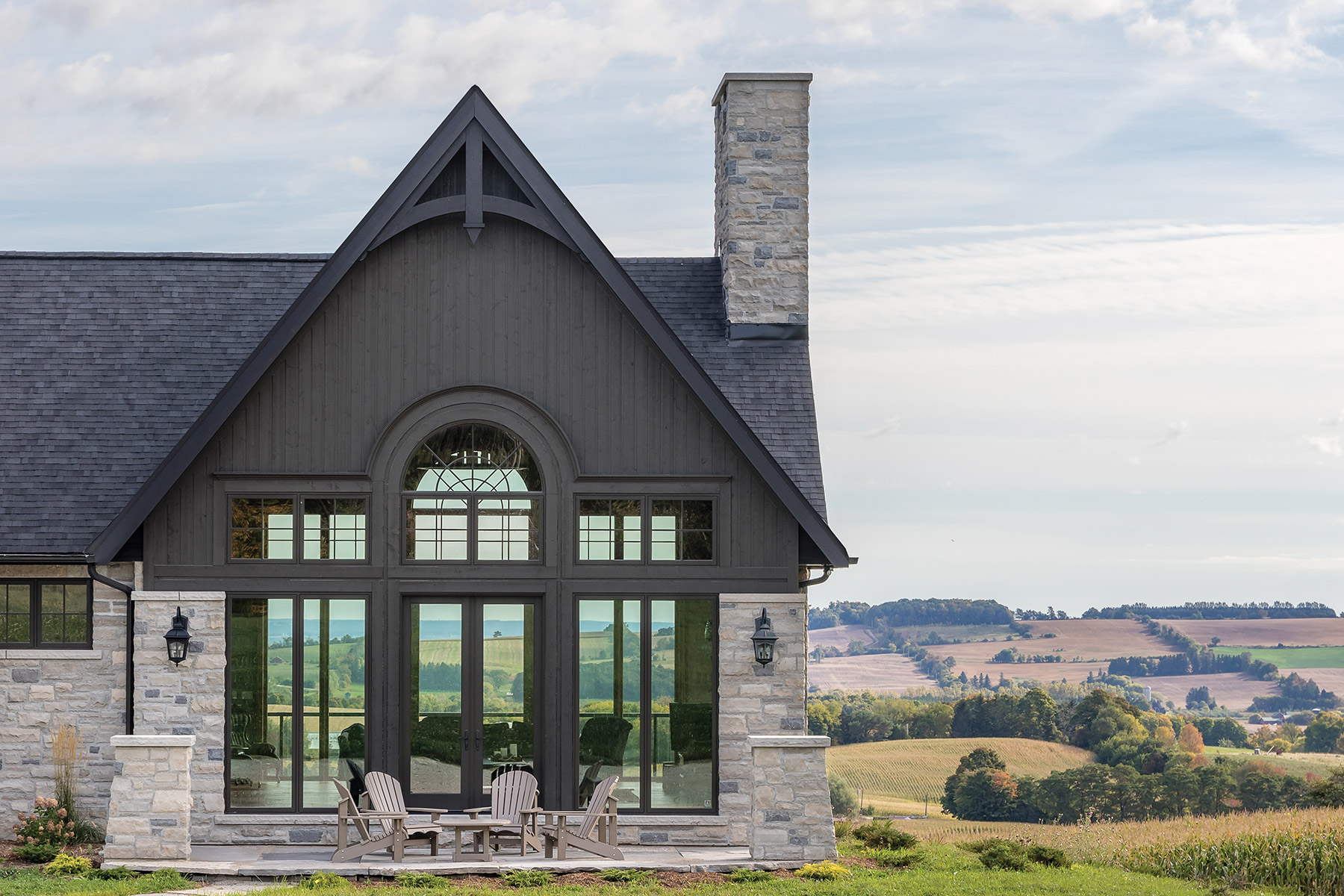
Every rural property tells a different story. The most successful homes begin with understanding the land—its views, its light, and the opportunities it presents.
If you’re thinking about designing a home on a rural property, reach out to our team, we’d be happy to explore the possibilities with you.